Creating Sites
Structure a Shizuka source directory.
A Shizuka site is a directory with a config file and some content:
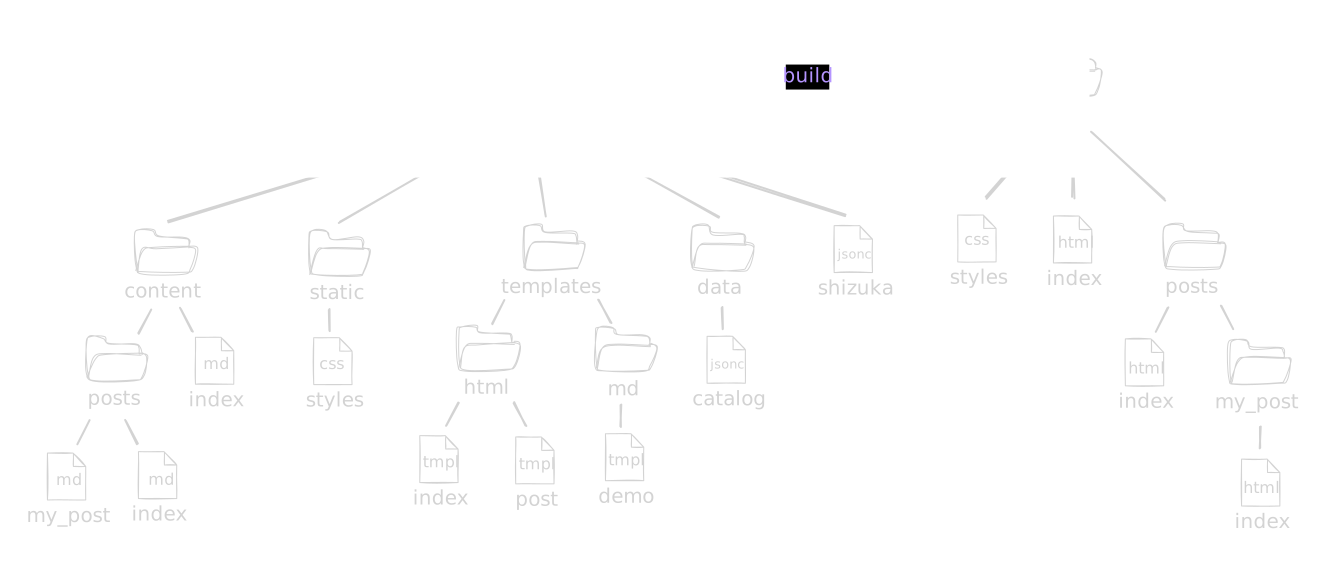
Source site folder and generated dist/ output.
File Structure
| Path | Purpose |
|---|---|
content/ | Source pages. Markdown pages are converted to HTML and then rendered through a template. |
data/ | Optional structured data manifests registered as query tables. |
templates/ | Go template files. HTML layouts live under templates/html/; markdown components live under templates/md/. |
static/ | Copied to the output as-is: CSS, images, JavaScript, fonts, and other static files. |
dist/ | The default build output folder. |
Output Structure
Shizuka outputs pretty URLs by writing index.html files into directories. Files named index.* are treated treated as belonging to their parent directory, whereas other files will create their own directory + index.html file, depending on their name.
For example:
| Source | Output |
|---|---|
content/index.md | dist/index.html |
content/about.md | dist/about/index.html |
content/posts/hello.md | dist/posts/hello/index.html |
content/posts/index.md | dist/posts/index.html |
Content File Types
| Extension | Behavior |
|---|---|
*.md | Markdown body, optional frontmatter. |
*.html | Raw HTML body, optional frontmatter. |
*.toml, *.yaml, *.yml, *.json, *.jsonc | Structured page objects. They must contain template and body; set body_markdown = true to render body as Markdown. |
All other filetypes under content/ are ignored. Put CSS, images, JavaScript, fonts, and other static files under static/.
Data Files
If a data/ directory exists, Shizuka loads *.toml, *.yaml, *.yml,
*.json, and *.jsonc files as data manifests. Each manifest can define one
or more query tables:
{
  "tables": {
    "products": {
      "name": "shop_products",
      "rows": [
        { "id": "a", "title": "Alpha" },
        { "id": "b", "title": "Beta" }
      ]
    }
  }
}
name is the public table identifier used in template queries. rows may be
an array of objects or a keyed object whose keys are added as a key column.